
While my family and I were headed north to our vacation in the Ozark Mountains of Arkansas, we stopped in Eastern Texas in a spot know for rare trilliums and other spring specialties in the Big Thicket National Preserve. Here, we came across dense stands of pale pitcher plants (Sarracenia alata) in the open wetland pine savannah along the Pitcher Plant Trail. Also called yellow trumpets, this is the only native pitcher plant in the preserve and one of the classic carnivorous plants of these nutrient-poor bogs and seepage areas in eastern Texas.
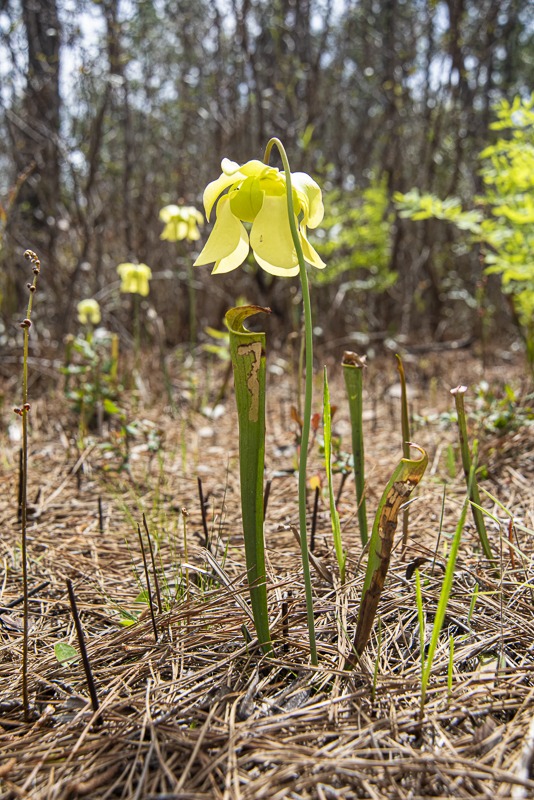
The upright, trumpet-shaped leaves (modified into pitchers) are usually yellow-green, sometimes with purple veins, and they rise from short rhizomes in clumps. Insects are drawn in by color and nectar, slide down the waxy interior, and can’t climb back out past the downward-pointing hairs. At the bottom sits a pool of fluid with digestive enzymes that breaks down the soft parts so the plant can absorb the nutrients—exactly what it needs in these acidic, low-nutrient soils. Flowers appear in March and April on separate stalks: large, nodding, and pale to deep yellow, with a distinctive umbrella-like style disc.
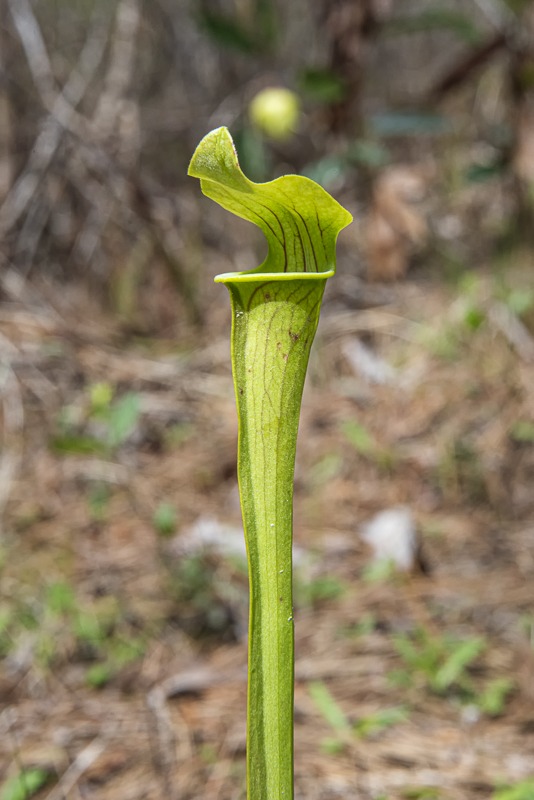
In the Big Thicket they show up alongside sundews, butterworts, and orchids in the seasonally wet meadows kept open by fire and groundwater seepage. It’s one of those plants that makes the thicket feel like a different world once you step into the open savannah—quiet, insect-rich, and full of these living traps.
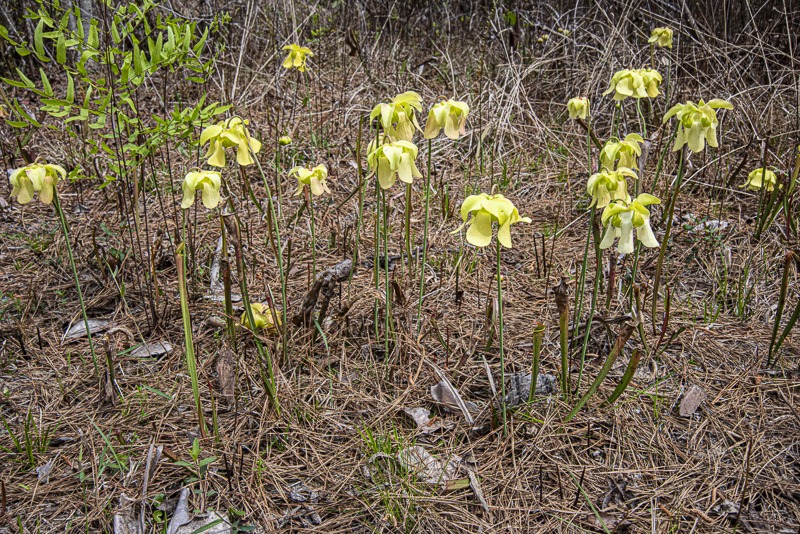
What a cool find!
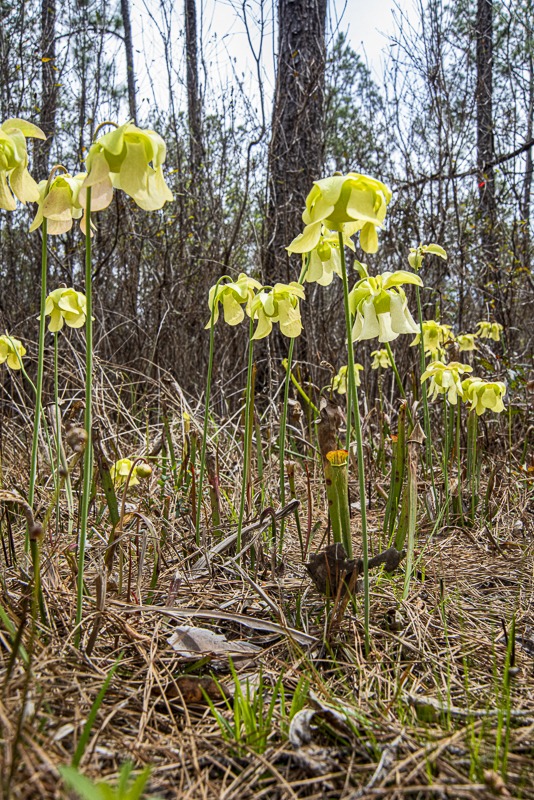
More Images of Carnivorous Plants
ALL IMAGES ARE AVAILABLE FOR PRINT OR DIGITAL DOWNLOAD. JUST CLICK ON THE IMAGE AND ADD TO CART.


0 Comments