
Notes from the Field

Interesting Nature Facts #81 – Snowshoe Hare
While these larger cousins of rabbits are well known for having white coats in winter and brown coats in the summer, individuals in Washington's Olympic National Park will retain their brown coat all throughout the winter. MORE PHOTOS OF MAMMALS MORE INTERESTING...

Interesting Nature Facts #80 – Pika
Pikas inhabit talus (rock pile) fields that are fringed by suitable vegetation on alpine areas. Since they do not hibernate, pikas cash food in hay piles to eat during winter. This behavior is known as haying. MORE PHOTOS OF MAMMALS MORE INTERESTING NATURE FACTS...

Interesting Nature Facts #79 – Squirrel Treefrogs
Squirrel treefrogs are typically nocturnal, but often come out to enjoy the sights & sounds of the rain during the day. MORE PHOTOS OF AMPHIBIANS MORE INTERESTING NATURE FACTS Interesting Nature Facts is a series about the flora, fauna and places that make North...

Interesting Nature Facts #78 – American Alligator
American alligators have 78 to 82 teeth and may lose and replace 2,000 to 3,000 teeth in a lifetime. MORE PHOTOS OF ALLIGATORS MORE INTERESTING NATURE FACTS Interesting Nature Facts is a series about the flora, fauna and places that make North America so amazing....

Interesting Nature Facts #77 – Northern Mockingbird
Northern Mockingbirds sing all through the day, and often into the night. Most nocturnal singers are unmated males, which sing more than mated males during the day, too. Nighttime singing is more common during the full moon. MORE PHOTOS OF BIRDS MORE INTERESTING...

Interesting Nature Facts #76 – Native Orchids
To say that the number of wild native orchids found around the world is massive would be a massive understatement. Approximately 28,000 orchid species are found alive today which more or less equals the number of bony fish species found in the waters all over the...

Interesting Nature Facts #75 – Rattlesnakes
Equipped with the most efficient heat receptors in the animal world, rattlesnakes distinguish not only direction of an object that differs in temperature from its background, but also distance, sensing changes of less than .001 degree Fahrenheit! MORE PHOTOS OF SNAKES...

Interesting Nature Facts #74 – Brown-Headed Cowbird
Brown-headed cowbirds are nest parasites and use red-winged blackbirds as a host to raise their young. These cowbirds will puncture one of the blackbird's eggs and lay their own egg in the nest. The cowbird egg is then hatched and taken care of along side the...

Interesting Nature Facts #73 – Gila Monster
Mating season for the gila monster starts in spring. This also happens to be the nesting season for ground-nesting birds, who are their favorite prey item. Coincidence? We think not. MORE PHOTOS OF LIZARDS MORE INTERESTING NATURE FACTS Interesting Nature Facts is a...

Interesting Nature Facts #72 – Salmonberry
The salmonberry as we know it is actually an aggregate of drupelets - groups of small berries each containing a seed that form a single cluster from one flower - just like other bramble berries such as raspberries and blackberries. MORE PHOTOS OF BERRIES MORE...

Interesting Nature Facts #71 – Pacific Banana Slug
Banana slugs have two pairs of tentacles, both of which can be retracted to protect them from the environment. The larger pair of tentacles are used to sense the brightness of light. The smaller pair are used to sense smells. MORE PHOTOS OF INVERTEBRATES MORE...
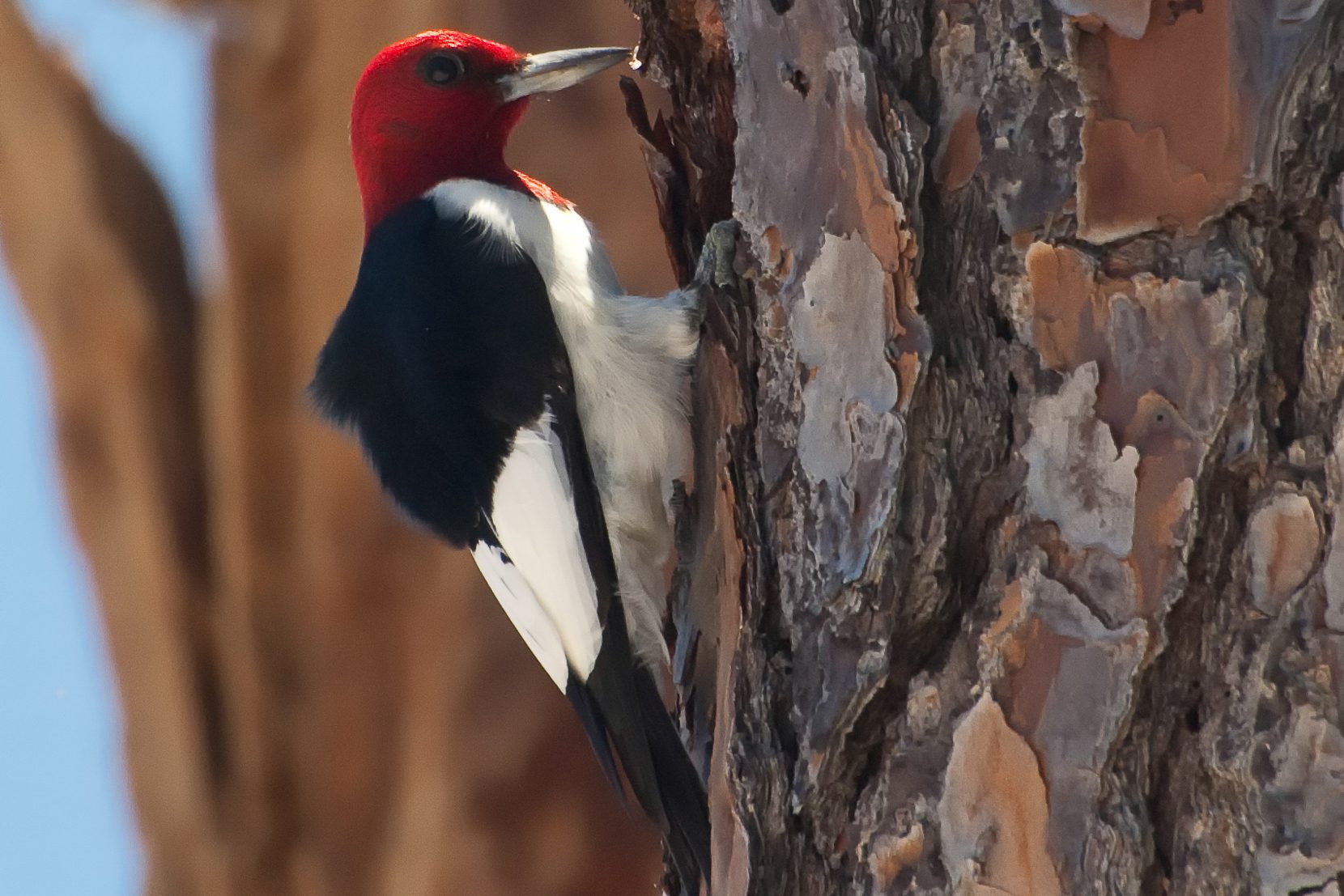
Interesting Nature Facts #70 – Woodpeckers
Woodpeckers have zygodactyl feet with four toes, the first and fourth facing backward and the second and third facing forward. This helps them grasp branches and tree trunks and enables them to walk vertically up a tree. MORE PHOTOS OF BIRDS MORE INTERESTING NATURE...